

Warning Signs Your Kitchen Exhaust System Needs Professional Cleaning
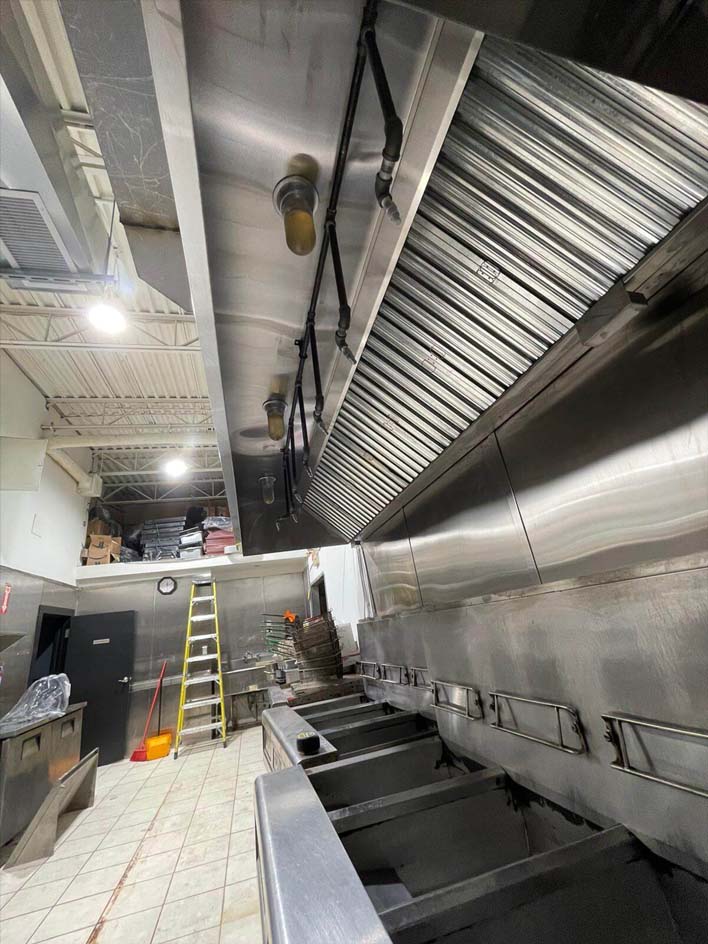
Most restaurant owners do not schedule cleaning because they feel like it. They schedule it because something changes. Smoke starts hanging under the hood. The fan gets louder. The kitchen smells greasier than usual. Staff complain the line feels hotter. All of those are classic kitchen exhaust cleaning warning signs, and they usually show up before a bigger problem hits, like a failed inspection, equipment breakdown, or a forced shutdown during service.
At The Kitchen Exhaust, we help operators across the GTA identify kitchen exhaust cleaning warning signs early, then fix the root cause with a full hood to roof cleaning plan. The goal is simple: keep your system safe, keep airflow stable, and keep your kitchen easier to maintain every day. In this guide, you will learn the most common kitchen exhaust cleaning warning signs, what they typically mean, what you can check safely, and when professional service is the smartest move. You will also see service names you can use for internal links later, including Commercial Hood Kitchen, Commercial Duct Work, Commercial Exhaust Fan, and Make Up Air / Fresh Air.
Why Warning Signs Matter More Than A Calendar
Some restaurants follow a strict schedule and never think about it again. Others stretch maintenance until something goes wrong. The problem with waiting is that grease buildup is not linear. It builds slowly, then accelerates. Once the duct and fan start loading up, airflow changes, capture weakens, and grease spreads faster. That is why kitchen exhaust cleaning warning signs are more reliable than guessing by dates alone. The earlier you respond, the easier and cheaper it usually is to restore performance.
In Ontario, commercial cooking ventilation maintenance is often discussed in the context of fire safety standards, including NFPA 96 as referenced by the Ontario Fire Code. That is not only a compliance issue. It is a practical safety reminder that grease is fuel, and the hood, duct, and fan are the path it travels through. Keeping that path clean and documented is a straightforward way to reduce risk and avoid unpleasant surprises.
How Grease Buildup Changes Airflow And Capture
When grease accumulates in filters, ductwork, and the exhaust fan, the system experiences higher resistance. That resistance can reduce airflow, which means your hood captures less smoke and vapour. Many operators notice kitchen exhaust cleaning warning signs first during peak service because that is when cooking load is highest and the system is under the most stress.
Airflow changes also affect comfort. If heat and smoke are not removed effectively, the line feels hotter, staff fatigue rises, and cleaning routines become harder to maintain. This is one reason experienced operators treat kitchen exhaust cleaning warning signs as operational signals, not just maintenance details.
Why A “Clean Looking Hood” Can Still Be A Problem
A hood can look clean from the outside while the duct and roof fan are coated. That is one of the most common traps. The visible portion is only part of the Commercial Hood Kitchen system. A true professional cleaning addresses the full path, including Commercial Duct Work and the Commercial Exhaust Fan. If only the visible hood is cleaned, kitchen exhaust cleaning warning signs often return quickly, because the hidden grease remains and continues affecting airflow.
If your kitchen looks clean but odors and smoke are increasing, it is a strong hint that grease buildup exists beyond what you can see.
Warning Sign One: Smoke Lingers Or Spills Past The Hood
One of the clearest kitchen exhaust cleaning warning signs is smoke that lingers longer than it used to. If you notice smoke rolling out past the hood edges, drifting toward dining areas, or collecting under ceiling vents, your capture is weakening. This can happen because filters are clogged, ducts are restricted, the fan wheel is coated, or the system is not balanced properly.
When smoke spillage increases, kitchens often become harder to keep clean because grease and vapours settle on surrounding surfaces. That leads to stickier walls, faster grime buildup, and more daily labor. If you want to stay ahead of this, treat spillage as a serious warning sign and schedule an inspection.
Common Causes Behind Smoke Spillage
The most common causes include dirty filters, heavy grease buildup in Commercial Duct Work, and a roof fan that is coated or out of balance. Another common cause is poor Make Up Air / Fresh Air balance, which can create turbulence and disrupt capture. When replacement air is missing or delivered incorrectly, the hood can struggle even if the fan is running.
This is why the best approach is system-level. Do not assume it is only the hood. Smoke spillage is one of those kitchen exhaust cleaning warning signs that can be caused by multiple linked issues.
Warning Sign Two: Stronger Grease Odors Inside Or Outside
Another strong kitchen exhaust cleaning warning signs pattern is a noticeable increase in greasy odor. If the kitchen smells greasier even after normal cleaning, or if neighbors complain about smell near the exhaust discharge, grease deposits may be building up in the duct or fan. Odor often increases when airflow changes, because vapours are not moving through the system as smoothly.
Odor is also a customer experience issue. If grease odor drifts into dining or front-of-house, it can affect reviews and repeat business. Many operators treat odor complaints as an early warning that the hood to roof path needs attention.
Why Odor Often Means Hidden Buildup
Filters can catch much of the grease, but not all of it. Over time, grease deposits can form in duct seams, elbows, and fan housings. Those deposits can trap odors and release them when the system heats up during service. If you keep seeing kitchen exhaust cleaning warning signs related to odor, and surface cleaning does not help, it usually points to professional cleaning needs in the duct and fan.
A complete Commercial Kitchen Exhaust System cleaning approach is often the fastest way to restore a neutral baseline and reduce repeat odor issues.
Warning Sign Three: The Exhaust Fan Gets Louder Or Vibrates More
A roof fan that suddenly becomes noisy is one of the most urgent kitchen exhaust cleaning warning signs. Loud fans often indicate grease buildup on the fan wheel, imbalance, worn bearings, loose mounting, or airflow restriction that is forcing the fan to work harder. Even if the fan is mechanically fine, a coated wheel can create vibration that travels through the roof curb and down the duct.
Noise is not only annoying. It can signal that the fan is operating under strain. Strain can lead to failure, and failure can lead to downtime during service. If the fan has become louder recently, book an inspection and do not assume it will “settle down.”
How Cleaning Can Reduce Fan Noise
When grease builds up unevenly on blades, it throws off balance. A professional Commercial Exhaust Fan cleaning removes that grease and can restore smoother rotation. In many cases, operators notice immediate improvement in noise and vibration after a full hood to roof cleaning.
If noise returns quickly, it can mean grease is accumulating rapidly due to high cooking volume, poor filter maintenance, or airflow imbalance. That is where Make Up Air / Fresh Air evaluation becomes helpful, because negative pressure and turbulence can worsen grease travel and speed up buildup.
Warning Sign Four: Filters Clog Faster And Look Darker
Filters are your first line of defense. When filters begin clogging faster than usual, it is one of the most consistent kitchen exhaust cleaning warning signs. It can mean cooking volume increased, more grease-producing menu items were added, or the system is not capturing as efficiently due to restriction downstream. It can also mean filters are not being cleaned properly or are being reinstalled incorrectly.
If filters are sticky, heavy, or dripping, do not ignore it. Dirty filters can increase grease bypass, which loads the duct faster and shortens the time between professional cleanings.
Filter Issues Often Predict Duct And Fan Issues
Filters that are clogged or misaligned allow more grease into the duct. Over time, that leads to heavier duct deposits and fan contamination. If your restaurant keeps seeing kitchen exhaust cleaning warning signs around filters, it is wise to schedule a deeper inspection of Commercial Duct Work and the roof fan rather than waiting for more visible problems.
This is also a good moment to confirm staff training on filter care. The simplest daily habits often have the biggest impact on long-term maintenance intervals.
Warning Sign Five: The Kitchen Feels Hotter And Air Feels Stuffy
A kitchen that feels hotter, more humid, or “stuffy” is another major kitchen exhaust cleaning warning signs category. When airflow drops, heat and moisture remain in the kitchen longer. That affects staff comfort, productivity, and even food quality. It also affects cleaning routines because staff may rush cleaning tasks at the end of a hot shift.
Sometimes this is purely an exhaust cleanliness issue. Other times it is a balance issue where the Make Up Air / Fresh Air supply is not keeping up, so the kitchen goes negative and airflow becomes unstable. Either way, a hotter kitchen is a signal to inspect the system.
Why Ventilation Quality Is A Kitchen Operations Issue
Ventilation affects indoor environment quality, comfort, and how well contaminants are removed. Health Canada’s ventilation education emphasizes the importance of supplying outdoor air and exhausting indoor air to support a healthier indoor environment. While restaurant kitchens are a unique case, the core principle applies: stable ventilation supports a cleaner, more comfortable space.
If your kitchen is hotter than normal, treat it as one of the kitchen exhaust cleaning warning signs and investigate before it leads to staff complaints or performance issues.
Warning Sign Six: Grease Residue Appears Around Seams, Walls, Or Access Doors
Visible grease residue around hood seams, corners, backsplash areas, and duct access points is one of the most obvious kitchen exhaust cleaning warning signs. Grease in these locations suggests that vapours are not being captured and contained as effectively as they should be, or that grease deposits inside the system are significant enough to seep out through seams and joints.
This residue also spreads quickly. Once grease is on walls and nearby surfaces, dust and dirt stick to it, and cleaning becomes harder. If you see this sign, it is usually time to schedule professional cleaning rather than relying on extra wipe-downs.
Why Residue Often Signals Deeper Buildup
Grease is rarely only where you see it. If grease is visible at seams, it often means deposits are heavier inside the hood plenum, duct, or fan. That is why this warning sign often leads to a full Commercial Hood Kitchen service plus Commercial Duct Work cleaning and roof fan cleaning.
If you keep wiping the same areas and grease returns quickly, that is a classic pattern of kitchen exhaust cleaning warning signs that indicates deeper system contamination.
Quick Kitchen Exhaust Cleaning Warning Signs Checklist
Use this checklist for a fast weekly review. If you check several boxes, schedule an inspection.
- Smoke lingers under the hood
- Smoke spills past the hood edge
- Grease odor is stronger than usual
- Filters clog faster or drip grease
- Roof fan is louder or vibrates more
- Kitchen feels hotter and more humid
- Grease residue appears on hood seams
- Grease stains show at duct access doors
- Doors are harder to open, hinting at negative pressure
- Staff complain about air quality during rush periods
These kitchen exhaust cleaning warning signs are often the earliest signals that professional service will save you time and trouble.
How To Confirm The Problem Without Risky Guesswork
You do not need to climb onto a roof to gather useful information. Start by noting when the issue happens. Is it worse during peak service? Does it change when doors open? Does it worsen on windy days? Those details can indicate whether the root cause is buildup, airflow restriction, or Make Up Air / Fresh Air balance problems.
You can also check what is safe indoors. Look at filters and grease cups. Look at hood corners and seams. Check for residue on nearby walls and ceiling areas. These observations help a professional diagnose faster and help you avoid unnecessary repairs.
What Not To Do When You Notice Warning Signs
Do not try to “solve” the problem by turning down the exhaust fan if it reduces capture. Do not ignore a loud, vibrating fan. Do not attempt rooftop access without proper training and safety equipment. A professional service exists for a reason, and the cost of an accident or a system failure is far higher than scheduling maintenance.
If the fan is shaking severely, you smell burning, or capture is failing badly, treat that as urgent and call for professional support immediately.
How Professional Cleaning Solves The Root Cause
A proper professional cleaning is not a wipe-down. It is a full process that includes containment, degreasing, deep cleaning of hood interior and filters, cleaning of ductwork through access doors, and cleaning of the roof fan blades and housing. It ends with a service report that documents what was cleaned and what the next recommended interval should be.
This process directly addresses most kitchen exhaust cleaning warning signs. It restores airflow by removing restrictions. It reduces odors by removing deposits. It reduces fan noise by cleaning grease off the wheel. It reduces residue spread by improving capture. And it gives you documentation that supports inspections and predictable maintenance planning.
Why Air Balance Is Part Of A Complete Plan
Sometimes cleaning alone is not enough, especially if the kitchen is starved for replacement air. If your building is strongly negative, capture can still be unstable even after cleaning. That is why Make Up Air / Fresh Air evaluation can be part of a full plan. Balanced airflow supports better capture and can help the system stay cleaner between services.
If you consistently see kitchen exhaust cleaning warning signs returning faster than expected, airflow balance is one of the first things to check.
Why Choose The Kitchen Exhaust
Kitchen exhaust cleaning warning signs are easiest to handle when you have a team that understands the whole system, not just the hood face. The Kitchen Exhaust focuses on complete hood to roof service that connects Commercial Hood Kitchen cleaning, Commercial Duct Work cleaning, and Commercial Exhaust Fan service into one practical plan. We also evaluate Make Up Air / Fresh Air conditions when airflow issues are affecting capture, comfort, and cleanliness.
We understand restaurant realities: service hours, staffing pressure, inspections, and the need for clear documentation. Our goal is to restore safe, stable airflow and reduce repeat problems, so you spend less time reacting to warning signs and more time running your business.
Stop Problems Before They Become Emergencies
If you are noticing kitchen exhaust cleaning warning signs, do not wait for an inspection or a breakdown to force your hand. Smoke lingering, stronger odors, louder fans, faster filter clogging, hotter kitchens, and visible grease residue are all signals that your hood exhaust path needs professional attention. The fastest way to protect your operation is to schedule an inspection, clean based on real condition, and keep documentation organized.
The Kitchen Exhaust can assess your system and provide full service support through Commercial Hood Kitchen, Commercial Duct Work, Commercial Exhaust Fan, and Make Up Air / Fresh Air evaluation. Contact The Kitchen Exhaust to book an assessment and build a maintenance plan that keeps kitchen exhaust cleaning warning signs from turning into expensive emergencies.
Frequently Asked Questions
- What are the most common kitchen exhaust cleaning warning signs in restaurants?
The most common kitchen exhaust cleaning warning signs include smoke lingering, stronger grease odor, loud fan noise, faster filter clogging, and visible grease residue near the hood. - Can a loud roof fan be one of the kitchen exhaust cleaning warning signs?
Yes. A loud or vibrating fan is a major kitchen exhaust cleaning warning signs indicator and often points to grease buildup on the fan wheel or airflow restriction. - How fast can kitchen exhaust cleaning warning signs appear after a schedule change?
Kitchen exhaust cleaning warning signs can appear quickly if cooking volume increases, new fryers are added, hours extend, or filters are not cleaned consistently. - Do kitchen exhaust cleaning warning signs always mean the duct is dirty?
Not always, but many kitchen exhaust cleaning warning signs are linked to hidden buildup in Commercial Duct Work and the roof fan, so inspection is recommended. - Can makeup air problems create kitchen exhaust cleaning warning signs?
Yes. Poor Make Up Air / Fresh Air balance can weaken hood capture and increase grease spread, which can create kitchen exhaust cleaning warning signs even if the hood looks clean. - What should I do when I notice kitchen exhaust cleaning warning signs?
Document what you notice, check filters and visible hood areas safely, and schedule a professional inspection and cleaning to address the root cause. - How can The Kitchen Exhaust help with kitchen exhaust cleaning warning signs?
The Kitchen Exhaust can inspect and service your Commercial Hood Kitchen, Commercial Duct Work, Commercial Exhaust Fan, and Make Up Air / Fresh Air balance so kitchen exhaust cleaning warning signs are resolved and less likely to return.