

Rooftop Unit Replacement for Restaurants: What to Plan For
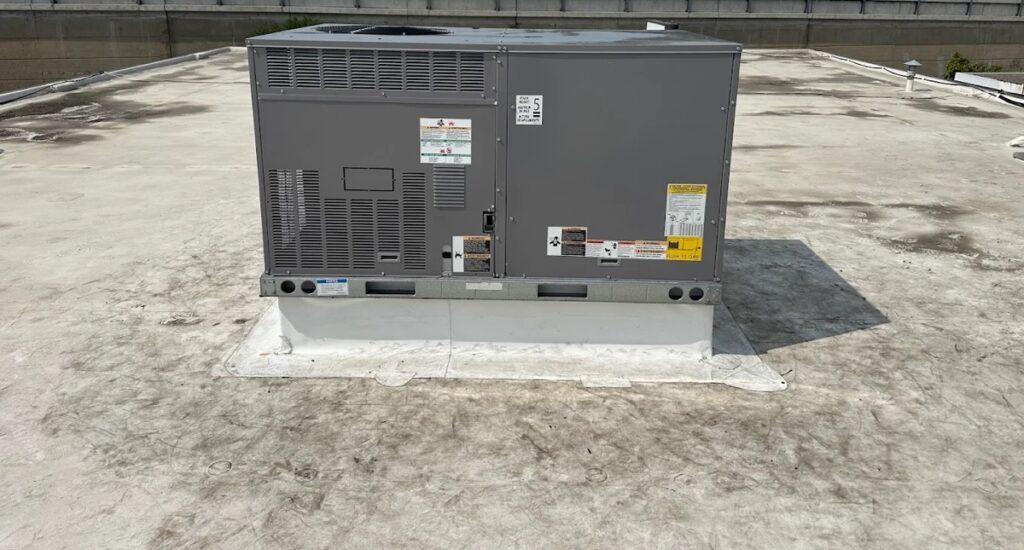
For most restaurants, the rooftop unit is the piece of equipment nobody thinks about until the dining room is too warm on a busy Friday night or too cold during a January lunch rush. A restaurant rooftop unit replacement is much easier to manage when you plan it before the old unit gives out, instead of scrambling for a solution in the middle of service. This guide explains the signs it may be time to replace your unit, what to look at before the work starts, and how to keep the disruption to your restaurant as small as possible.
At The Kitchen Exhaust, we install commercial rooftop units and design and install the HVAC ductwork that connects them to the space below, for restaurants, plazas, offices and retail spaces across the GTA.
Signs It May Be Time to Plan a Restaurant Rooftop Unit Replacement
A rooftop unit rarely fails without warning. Most restaurants see a pattern of small problems first. Watch for:
- Uneven temperatures. The dining room near the windows is cold while the bar area is warm, or one end of the restaurant never feels right no matter how the thermostat is set.
- Comfort complaints that keep coming back. Guests ask to move tables, and staff on the floor and on the line complain about the heat or the cold.
- A unit that struggles during busy service. The space feels fine in the morning but falls behind once the dining room fills up and the kitchen is at full output.
- Repeated breakdowns. When the same unit needs attention again and again, it is worth comparing the ongoing disruption with the cost of a planned replacement.
- A space that has changed. A renovation, a new layout or an expanded dining area can leave an older unit trying to serve a space it was never chosen for.
None of these signs alone means the unit must come out tomorrow, but together they are a good reason to start planning.
What We Look at Before a Rooftop Unit Replacement
A replacement is not just a matter of swapping one box for another. Before we quote a commercial rooftop unit installation, we look at the whole picture:
- The roof. Where the existing unit sits, how it is supported, how equipment can be brought up safely and what else shares the roof, such as exhaust fans and make-up air units.
- The existing unit and its connections. How the current unit connects to the building, and what will need to change for the new one.
- The supply and return ductwork. The ductwork decides where heating and cooling actually end up. A new unit connected to a poor duct layout will still leave cold and warm spots.
- How the space is used today. Seating, the bar, the kitchen, washrooms, storage and offices all have different needs, and they may have changed since the original unit went in.
Replace the Unit Only, or Review the Layout Too?
Sometimes the right answer is a straight replacement on the same part of the roof, connected to the existing ductwork. Other times, a replacement is the best chance in years to fix problems that the old unit was blamed for but that really came from the duct layout.
A rooftop unit replacement is a good time to review the ductwork if:
- You are renovating the dining room or changing the seating layout.
- Some areas have always been too warm or too cold, even when the old unit was working well.
- Walls have moved or rooms have been added since the ductwork was installed.
Because we design and install HVAC ductwork as well as rooftop units, we can look at both at once and tell you whether the existing ductwork should stay, be adjusted or be redesigned.
How Your Kitchen Affects the Rooftop Unit
A restaurant is not like an office or a store. Your kitchen exhaust pulls a large amount of air out of the building through the hood, and that air has to be replaced. In a well-designed restaurant, make-up air brings that replacement air back in, while the rooftop unit looks after comfort in the dining room and the rest of the space.
When the balance between these systems is off, the rooftop unit often gets the blame. Doors that pull hard, drafts near the entrance and a dining room that never warms up can all come from the kitchen side of the building. That is why we look at the rooftop unit together with your commercial kitchen exhaust system and make-up air, so the new unit is not asked to do a job it was never meant to do.
Keeping Downtime Low
For a restaurant, the biggest worry about a replacement is often not the equipment, it is the disruption. A few steps help keep it manageable:
- Plan ahead. Replacing a unit on your schedule is far easier than replacing one that has already failed during a heat wave or a cold snap.
- Work around service hours. We plan the work with you so it fits around your opening hours as much as possible.
- Talk to your landlord or property manager early. In plazas and shared buildings, roof access, approvals and other tenants often need to be coordinated before the work can start.
- Know what to expect. Before the work begins, we walk you through what will happen and when, so your team can plan around it.
Frequently Asked Questions
Can a new rooftop unit go in the same place as the old one?
Often it can, but not always. It depends on the new unit, how the old one was supported and connected, and the condition of the roof. We confirm this when we look at the site, before you get a quote.
Do I need a permit to replace a rooftop unit?
Permit requirements depend on the scope of the work and your municipality. Your municipal building official has the final say, and we can talk you through what your project is likely to need.
Will replacing the rooftop unit affect my kitchen exhaust?
The rooftop unit and the kitchen exhaust are separate systems, but they share the same building air. A replacement is a good time to check that your exhaust, make-up air and HVAC work together, so the new unit performs the way it should.
Plan Your Rooftop Unit Replacement With The Kitchen Exhaust
If your restaurant’s rooftop unit is showing its age, it is worth planning the replacement before it becomes an emergency. The Kitchen Exhaust installs commercial rooftop units and designs and installs commercial HVAC ductwork for restaurants and other commercial spaces across the GTA. Call (416) 529-9274 or request a quote to talk through your space.